스페이스맵: 교수에서 룩셈부르크 우주 기술 창업자로
SpaceMap: From professor to spacetech founder in Luxembourg
07/08/2026
스페이스맵: 교수에서 룩셈부르크 우주 기술 창업자로
전세계 위성충돌방지기술 개발 기업 중 스페이스맵이 특별한 이유는 수학 개념인 '보로노이 다이어그램'을 이용해 기술을 개발하기 때문이다. 김덕수 대표는 1985년 미국 미시간대 박사 시절부터 보로노이 다이어그램을 연구했다.
스페이스맵은 2015년 미국 공군과학연구실이 보로노이 다이어그램을 위성 충돌 해결을 찾는 데 적용해볼 수 있지 않냐는 제안을 시작으로 2021년 창업이 이뤄졌으며, 미 공군과 여전히 협력연구를 하고 있다.
그 와중에, 2022년에 룩셈부르크에서 열린 '뉴스페이스 유럽(NewSpace Europe)' 컨퍼런스에 연사로 초청받으면서 스페이스맵과 룩셈부르크와의 인연이 시작되었다.
그 뒤, 룩셈부르크에 본사를 둔 상업용 위성 통신 회사 SES 대표의 초청으로 다시 룩셈부르크를 방문했을 때, 김덕수 대표는 유럽 내 추가적인 사업 기회를 모색하기 위해 룩셈부르크에 스페이스맵을 설립하기로 결정했다.
이제 스페이스맵은 룩셈부르크에서의 법인 설립 절차를 마무리한 후, 유럽 내 사업 기회를 모색할 예정이다.
SpaceMap: From professor to spacetech founder in Luxembourg
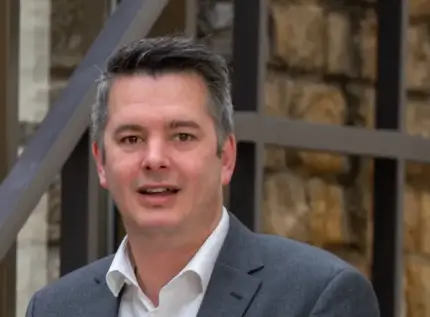
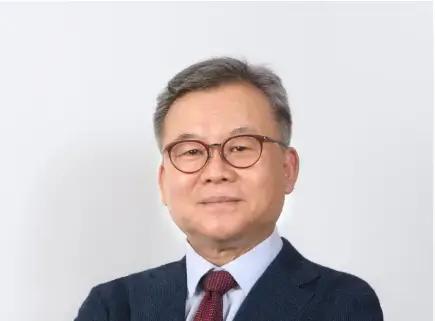
Running a spacetech company active on three continents was never part of his plan – Deok-Soo (Douglas) Kim intended to pursue his successful career in academic research. A chance meeting with a scientist from the US Air Force Research Laboratory changed everything. Today, his company SpaceMap – which develops a real-time platform for predicting satellite collisions – has joined Luxembourg's space community to grow its business in Europe
From professor to entrepreneur: The question that changed everything
Applied mathematics, and in particular computational geometry, has always been Mr Kim’s passion. After earning his PhD at the University of Michigan, he went on to become a professor at Hanyang University in Seoul, South Korea. There he gained international recognition for his work on Voronoi diagrams – a geometric method for dividing a space into distinct regions based on distance to a specific set of points.
Voronoi diagrams are notably applied in the field of navigation, and in 2015, Mr Kim met a researcher from the US Air Force Research Laboratory (AFRL) who was interested in whether his research could be used to predict collisions between satellites and other objects in space.
I was lucky enough to be able to develop a new algorithm that could change the paradigm for predicting in-space collisions.
Douglas Kim, SpaceMap
“I didn’t know anything about space back then,” Mr Kim admits. But he was intrigued by the question and gave it some thought. The result was a white paper that earned him AFRL funding for a three-year research project. “I was lucky enough to be able to develop a new algorithm that could change the paradigm for predicting in-space collisions.”
His research results aroused keen interest among his American partners, but needed further development to become practically applicable. To achieve this, they gave Mr Kim an unexpected suggestion: start a company.
“I had never had a thought about starting a company, and had no idea of what it would imply,” recounts Mr Kim. But once again, his interest was piqued. So the renowned professor enrolled as a student at his own university to follow a specialised curriculum on startup creation. “After one semester of hard work, I felt quite positive about the idea to start a company.” That was the beginning of SpaceMap.
One algorithm, three continents
SpaceMap develops a real-time decision-making platform that uses AI and computational geometry to predict and prevent collisions between satellites and debris in orbit – a discipline known as space domain awareness (SDA). Mr Kim founded the company in 2021 and spent the first two years converting his research results into a prototype system. In early 2024, the US Space Force invited him to join its Space Domain Awareness (SDA) TAP Lab, a tech accelerator for industry, academia and government to solve critical SDA challenges. “We are still working on this project, and it has become a major commitment now,” he says.
The company also started its business activity and gained a first contract with the US Space Force. In order to be eligible for bigger contracts, Mr Kim established a subsidiary of SpaceMap in Denver, Colorado. “We have hopes of collaborating on a much larger scale in the future.”
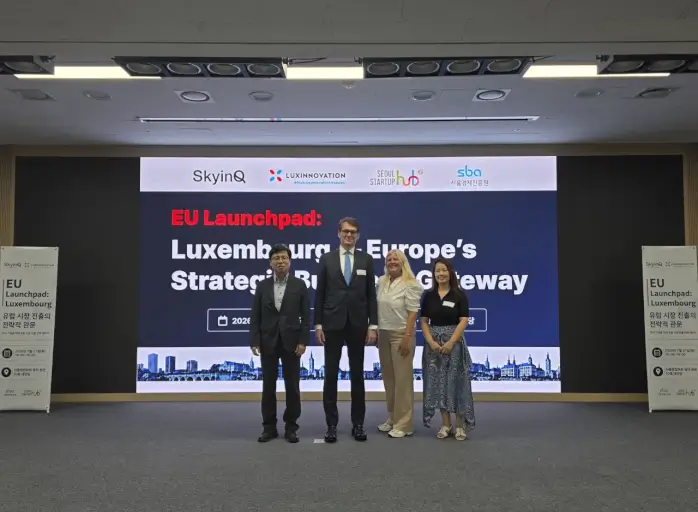
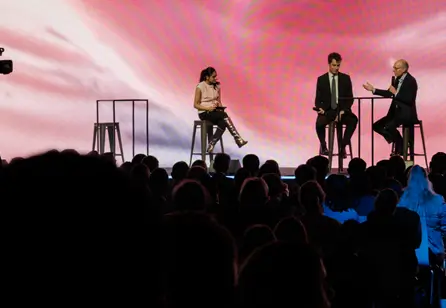
Meanwhile, his activities also attracted attention in Europe. In 2022, he was invited to give a speech at the NewSpace Europe conference in Luxembourg – a country which, at the time, he didn’t know much about. He also met Soyeh Kim, CEO of the Luxembourg-based business accelerator SkyinQ, who spoke warmly about the opportunities offered by the Luxembourg ecosystem.
I hope to be able to collaborate with the Luxembourg government and business ecosystem. Together, I think that we can make a good contribution to the world.
Douglas Kim, SpaceMap
Finally, the CEO of Luxembourg-headquartered satellite operator SES paid a visit to the SpaceMap booth at the 2025 Satellite Show in Washington D.C. “I was very surprised by his interest in our software,” says Mr Kim. “He invited me to visit the SES HQ, and a few months later I had the opportunity to come.”
After this second visit to the Grand Duchy, he decided to incorporate SpaceMap in Luxembourg to scout for further business opportunities in Europe. Motivated by the contacts with SES and other constellation owners, he also decided to extend SpaceMap’s solutions beyond safety and intelligence and address additional optimisation issues for commercial space that require even more complex computations.
Why SpaceMap chose Luxembourg's space ecosystem
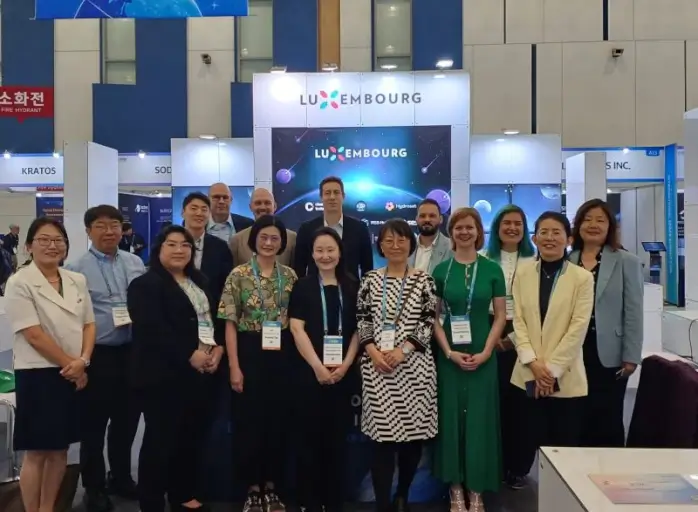
Back in Luxembourg in June 2026 as a participant at the Nexus Luxembourg tech event, Mr Kim is convinced his decision was right. “I have had interactions with people representing the government and many other visitors to my booth at the event,” he says. “Soyeh Kim from SkyinQ and Rebecca Koo from the Luxembourg Trade and Investment Office (LTIO) in Seoul have made introductions and helped me interact with these important people. I’m amazed by their attitude and willingness to help me.”
Soyeh Kim from SkyinQ and Rebecca Koo from the Luxembourg Trade and Investment Office (LTIO) in Seoul have made introductions and helped me interact with these important people. I’m amazed by their attitude and willingness to help me.
Douglas Kim, SpaceMap
After finalising the incorporation process in Luxembourg, Mr Kim will explore business opportunities in Europe. He hopes to launch his first R&D projects in Luxembourg and discuss cooperation with NATO to expand his list of key customers, which currently includes, among others, the US government and the Korean Ministry of National Defence, as well as some civilian organisations.
He finds Luxembourg clean, safe and conveniently located at the centre of Europe, and is very interested in the government’s policy for boosting artificial intelligence, particularly in the space domain. “SpaceMap is solving space problems using AI and I have created a new foundational model. I hope to be able to collaborate with the Luxembourg government and business ecosystem. Together, I think that we can make a good contribution to the world.”
Photo credits: SpaceMap
Source: SpaceMap: From professor to spacetech founder in Luxembourg - Trade & Invest