
Where scientific excellence meets strategic relevance
Minister Stéphanie Obertin outlines Luxembourg's research priorities and explains why they matter for companies pursuing R&D and innovation activities.
 Lena Mårtensson
03/09/2026
Luxembourg's updated research strategy places data, artificial intelligence and quantum technologies at the centre of the country's ambitions for 2030 and beyond. But what does this mean for international companies considering Luxembourg as a location for their R&D and innovation activities? We spoke to Stéphanie Obertin, Minister for Research and Higher Education and Minister for Digitalisation, to learn more about Luxembourg's research strengths, its interdisciplinary priority areas and the initiatives designed to foster collaboration between public research organisations and the private sector.
The government has recently published a new version of its research strategy. What are the main objectives of this strategy, and what type of impact is expected from its implementation?
Stéphanie Obertin: With this updated strategy, Luxembourg is reaffirming a clear ambition: to place research and innovation firmly at the heart of our future prosperity, resilience and strategic autonomy.
Our objective is not only to foster scientific excellence, but also to ensure that knowledge translates into tangible progress — economic progress, societal progress and technological leadership. In a rapidly evolving world, countries that invest in research strengthen their ability to shape change rather than simply respond to it.
Our objective is not only to foster scientific excellence, but also to ensure that knowledge translates into tangible progress — economic progress, societal progress and technological leadership.
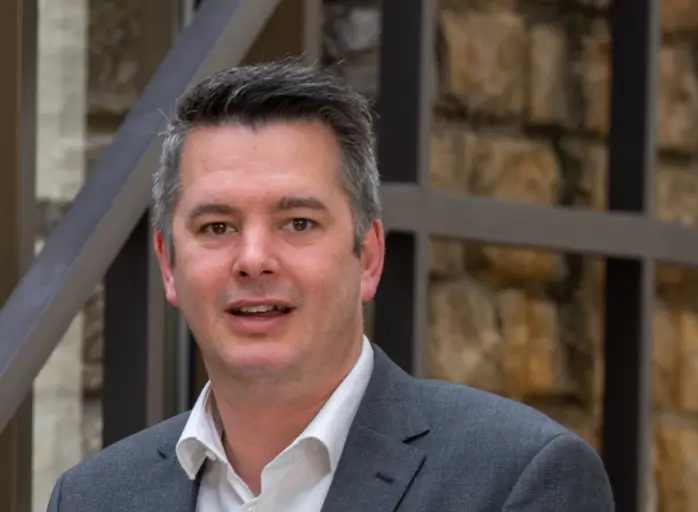
Stéphanie Obertin, Minister for Research and Higher Education
The strategy builds on our long-term vision towards 2030 while placing stronger emphasis on data, artificial intelligence and quantum technologies — key enablers of tomorrow’s economies. At the same time, it reinforces interdisciplinary collaboration and supports the translation of research into real-world applications.
Ultimately, we expect this strategy to enhance Luxembourg’s attractiveness for global talent, stimulate innovation across sectors and equip our country to address major transitions — digital, environmental and societal — with confidence.
Four interdisciplinary research priorities have been chosen as the main pillars of Luxembourg's research strategy. Why were these areas chosen, and why are they important for the country?
For a country of Luxembourg’s size, focus is strength. We have deliberately chosen priorities where scientific excellence meets strategic relevance, allowing us to achieve international visibility while addressing concrete societal and economic needs.
Our strategy is structured around four interdisciplinary priority areas:
- Industrial and service transformation reflects our determination to anticipate profound shifts in the global economy. Digitalisation, artificial intelligence, automation and data-driven innovation are reshaping entire value chains. By investing in research in these fields, Luxembourg is positioning itself not just to adapt to these transformations, but to actively help shape them — strengthening competitiveness while supporting economic diversification.
- Personalised healthcare builds on Luxembourg’s expanding biomedical ecosystem and our ambition to move towards more predictive, preventive and patient-centred models of care. Beyond scientific advancement, the goal is clear: improving quality of life while ensuring the long-term resilience of healthcare systems.
- With Sustainable and responsible development, we acknowledge that future prosperity must be environmentally and socially sustainable. Research in this area supports the transition towards climate neutrality, responsible resource management and smarter infrastructure — while opening new avenues for innovation-driven growth.
- Finally, 21st century education recognises that knowledge is the foundation of resilient and forward-looking societies. As technological change accelerates, education systems must evolve accordingly. Research helps us better understand how people learn, how skills demands are shifting, and how we can prepare future generations for jobs that may not yet exist.
Interdisciplinarity lies at the heart of this approach. Today’s most pressing challenges do not fit neatly into academic silos; they require collaboration across disciplines, institutions and sectors.
By concentrating our efforts in these four areas, we are creating the conditions for high-impact research, reinforcing Luxembourg’s attractiveness, and ensuring that public investment generates lasting value for both our economy and our society.
In what fields of research does Luxembourg stand out internationally? What is the importance of these fields for the country?
Luxembourg has demonstrated that size is no barrier to excellence. Over the past two decades, we have built strong international recognition in areas such as data-driven and computational science, cybersecurity, space technologies, financial innovation and precision health.
These domains are closely aligned with the transformation of our economy and our determination to anticipate future developments. Our expertise in data and artificial intelligence, for example, acts as a horizontal enabler across nearly every sector, while advances in biomedical research are paving the way for more personalised and effective healthcare.
Over the past two decades, we have built strong international recognition in areas such as data-driven and computational science, cybersecurity, space technologies, financial innovation and precision health.
Stéphanie Obertin, Minister for Research and Higher Education
Excelling in these fields enhances not only our scientific reputation but also our strategic positioning. It enables us to attract world-class researchers, innovative companies and high-value partnerships — all essential ingredients for a dynamic and competitive innovation ecosystem.
The strategy highlights research as a driver of innovation. What are the benefits of the approach for Luxembourg’s public research organisations?
By affirming research as a driver of innovation, we are empowering our public research organisations to play a decisive role in shaping the future.
This approach strengthens the bridges between discovery and application, encourages entrepreneurial thinking and accelerates the path from laboratory to society. At the same time, we remain deeply committed to fundamental research — because many of tomorrow’s breakthroughs will grow out of the curiosity-driven science being conducted today.
For our institutions, the strategy provides greater strategic clarity, enhanced international visibility, and the opportunity to act as key catalysts within a highly connected innovation ecosystem.
Could you highlight any recent initiatives or policy measures designed to strengthen the link between public and private-sector research and innovation?
Building strong and lasting bridges between public research and industry is one of our strategic priorities.
Luxembourg has expanded partnership programmes, refined funding instruments and supported collaborative platforms where researchers, startups and established companies can work together — particularly in strategic fields such as data, artificial intelligence and quantum technologies.
Our broader ambition to accelerate digital sovereignty is also creating trusted environments in which innovation can flourish securely and responsibly.
Stéphanie Obertin, Minister for Research and Higher Education
One example is the BRIDGES programme of the Luxembourg National Research Fund (FNR), which provides financial support for industry partnerships between public research institutions in Luxembourg and national or international companies. Under the law of 6 June 2025 on the renewal of aid schemes for research, development and innovation, joint calls for projects are organised based on a collaboration agreement between the FNR, the Ministry of the Economy and the Ministry of Research and Higher Education. Calls are published on the basis of a multi-year plan which defines the strategic areas where the government aims to foster the development of new applications, services and technological capabilities. For the years 2026 and 2027, the focus is placed on AI, data, quantum technologies as well as defence.
Our broader ambition to accelerate digital sovereignty is also creating trusted environments in which innovation can flourish securely and responsibly.
What guides us is a simple conviction: when public science and private ingenuity move forward together, the entire country advances.
In your opinion, what more could be done in Luxembourg to encourage further public-private collaborations in the field of R&D and innovation?
While Luxembourg already offers a highly favourable environment, further progress can be achieved by embedding collaboration even earlier — ideally from the very beginning of research projects.
Encouraging mobility between academia and industry, developing shared infrastructures, and maintaining agile frameworks can all help accelerate partnerships. Just as importantly, we must continue fostering a culture of openness and trust, where co-creation becomes the natural starting point rather than the exception.
We must continue fostering a culture of openness and trust, where co-creation becomes the natural starting point rather than the exception.
Stéphanie Obertin, Minister for Research and Higher Education
The Deep Tech Lab, announced as part of the strategic initiative “Accelerating Digital Sovereignty 2030”, is one of the upcoming initiatives that will facilitate this co-creation. It aims to stimulate the economic valorisation of deeptech research activities in Luxembourg by supporting and facilitating the development of innovative solutions. It will bring together national expertise in cutting-edge technologies and contribute to efforts to attract, retain and develop talent.
The Deep Tech Lab will be one of the cornerstones of a coherent approach for technology transfer, which is being developed by a working group initiated by the Ministry of Research and Higher Education.
Luxembourg has built a strong foundation. Our task now is to scale this momentum and ensure that public-private collaboration remains a defining feature of our innovation culture.
Interview conducted in late February 2026
Photo credits: Luxinnovation/Capsule
This article was originally published in Crossroads Magazine no. 9. Read the full edition below: