Inside Luxembourg’s strategy to become an R&D magnet
From finance to frontier research, Luxembourg is building an innovation ecosystem designed to attract talent, investment and ambitious R&D projects.
 Zuza Reda-Jakima
24/09/2026
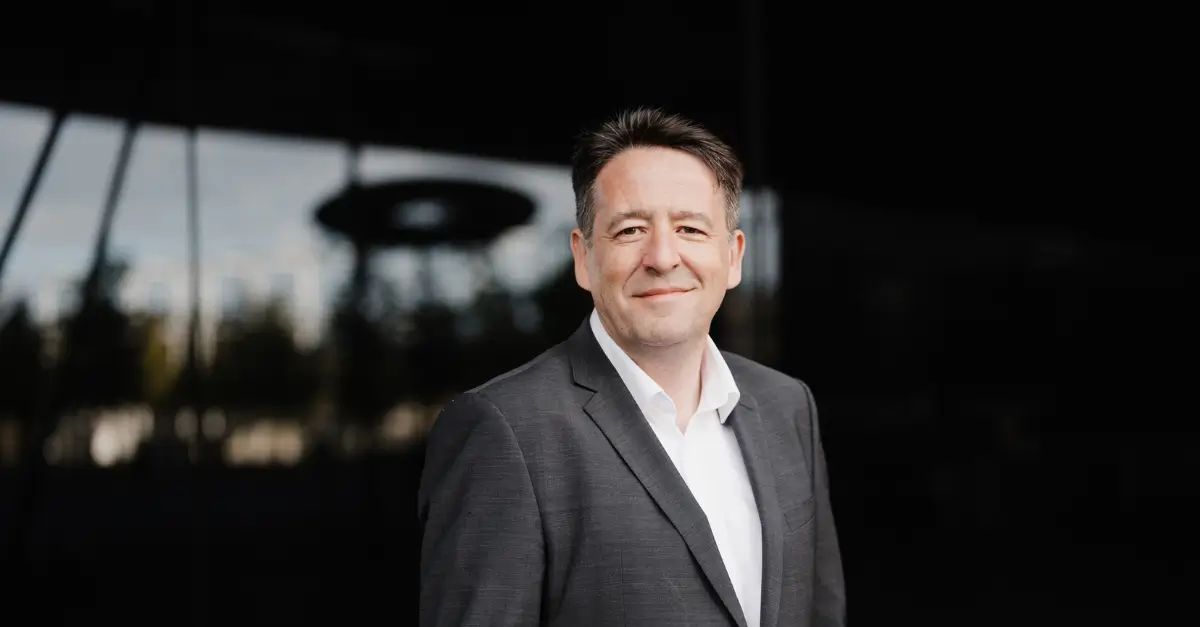
As CEO of Luxinnovation, the national innovation agency, Mario Grotz sits at the crossroads between government, research and business. He explains how Luxembourg is evolving from a financial centre into a knowledge-driven innovation hub – and what really convinces international companies to anchor their research and development (R&D) here.
How do you explain R&D to a non-expert?
Mario Grotz: R&D in companies has two main components. The first is process innovation – improving how you produce or deliver, for example, by integrating new sensors and intelligence into manufacturing to increase efficiency. The second is product and service innovation – developing entirely new offerings, such as advanced-materials-based tyre types. Both are essential, and both are supported by Luxembourg’s main R&D framework law.
Process innovation helps companies to stay competitive by constantly improving productivity, while product and service innovation is often more disruptive and can reshape entire markets. To use another example, using AI to create services that simply were not possible before, that’s product and service innovation.
Can you share some examples of companies doing R&D well in Luxembourg?
Goodyear is a good illustration. They have a large research centre in Luxembourg with around a thousand researchers, and at the same time, a significant manufacturing base. They innovate both on products and on production processes.
Smaller companies also choose Luxembourg for R&D. In the space and advanced materials area, for instance, Gradel has developed a breakthrough lightweight composite technology in collaboration with the Luxembourg Institute of Science and Technology (LIST). Another example is Passbolt, a cybersecurity startup that has built its open-source password management platform through sustained R&D investment which is now used by organisations worldwide.
How has Luxembourg’s economic model evolved – and why is R&D now so central?
If you look at our history, we moved from agriculture to steel, then to financial services, where regulation, political stability and multilingualism were key differentiators. Today, Luxembourg's competitiveness is built on knowledge, talent and innovation. Sustaining that advantage requires continued investment in R&D and the capacity to attract and retain skilled people.
Today, Luxembourg's competitiveness is built on knowledge, talent and innovation.
Mario Grotz, Luxinnovation
That is why, since the late 1990s and early 2000s, Luxembourg has been investing heavily in public and private R&D: by creating the University of Luxembourg, strengthening public research centres and supporting companies in building their own R&D capabilities. Increasingly, we connect public and private research to valorise academic knowledge through industrial partnerships.
Talent is often cited as a key factor. How does Luxembourg fare?
Talent attraction has become much more competitive, and we are competing with locations worldwide. Benchmark studies still rank Luxembourg among the top European countries in attracting talent per inhabitant. Salaries are competitive, the environment is secure and multicultural, and the quality of life is generally high.
Benchmark studies still rank Luxembourg among the top European countries in attracting talent per inhabitant.
Mario Grotz, Luxinnovation
At the government level, a new talent attraction strategy has been defined aiming to attract, retain and develop talent across all qualification levels to sustain the competitiveness and diversification of the Luxembourg economy. Luxinnovation contributes to this strategy by developing and promoting the "Work in Luxembourg" brand and portal, serving as the single point of entry for international professionals looking to work and settle in Luxembourg.
What really tips the balance when an international group chooses Luxembourg for an R&D centre?
Having brief communication lines and direct contact with decision-makers remains a significant benefit. One decisive factor is our ability to bring all key actors to the same table very quickly. I remember the first meeting with FM, a major international insurer that is now building a cutting-edge science and technology centre here: it included the university, LIST, Luxinnovation and representatives from the Ministries of Economy and Research.
Companies interested in coming here can discuss R&D, location and broader strategic questions in a coordinated way. This kind of short decision pathway and tailored, cross-institutional support is something many large countries struggle to offer.
Beyond jobs and taxes, how do R&D centres really change Luxembourg’s economy?
In a knowledge economy, you simply cannot remain competitive without continuous R&D investment. Innovation cycles are getting shorter. Where once a major investment could secure a competitive edge for a decade, digital technologies and AI have fundamentally changed the rhythm of progress. Innovation is no longer a sequence of distinctive projects – it is a continuous process. By the time one initiative reaches completion, the next must already be taking shape.
In a knowledge economy, you simply cannot remain competitive without continuous R&D investment.
Mario Grotz, Luxinnovation
That may feel like being on a treadmill, but it reflects the shift from a predominant financed-based economy to an economy based on knowledge. And I strongly believe competitiveness and sustainability must go hand in hand – future-proof companies will be both innovative and sustainable.
How do you measure success?
Success is not only about attracting international companies or supporting R&D projects – it is also about raising the quality of the support we provide. We must understand business models, data readiness and AI use cases, and be able to connect the dots between companies, research and funding programmes.
To be able to provide customised support for a wide range of business needs, we have built a multidisciplinary team with deep sector expertise. This enables us to talk to companies at eye level and then tailor the right mix of partners, instruments and programmes.
What misconception about Luxembourg’s innovation ecosystem would you most like to correct?
Luxembourg is often perceived as a one-sector economy dominated only by finance. Financial services remain central, but for over 20 years the country has been systematically investing in people, research, infrastructure like data centres and high-performance computing, and in general-purpose technologies such as ICT that benefit all sectors.
Rather than a single magic “USP”, Luxembourg offers a coherent set of advantages – from talent and infrastructure to connectivity and coordinated public support.
Mario Grotz, Luxinnovation
Rather than a single magic “USP”, Luxembourg offers a coherent set of advantages – from talent and infrastructure to connectivity and coordinated public support. For many R&D-driven companies, that mix is exactly what they need.
Photo credits: Luxinnovation/Marion Dessard
This article was originally published in Crossroads Magazine no. 9. Read the full edition below:
_previewimage.webp)