Investing in the innovation ecosystem: A strategic choice
Economy Minister Lex Delles on why Luxembourg attracts R&D-intensive companies and what makes them stay for decades.
 Lena Mårtensson
29/05/2026
Luxembourg has built a reputation as a location where R&D-intensive companies can design, test and deploy innovative technologies at the heart of Europe. But what makes the country so attractive for long-term technological investments, and why do so many companies choose to stay for decades? We spoke to Lex Delles, Minister of the Economy, SMEs, Energy and Tourism, to learn more about Luxembourg's strategic assets, the sectors offering the strongest opportunities and the initiatives designed to strengthen public-private collaboration in R&D and innovation.
Why is it important for Luxembourg to host companies with major R&D and innovation activities? What type of impact do these activities have on the national economy?
Lex Delles: For a country like Luxembourg whose economy is mainly focused on services, attracting companies that carry out significant R&D and innovation activities is essential, because our true wealth lies in the human capital and the ability to develop high value-added solutions. This enables strategic innovation activities, such as designing and prototyping new products, to be based in the Grand Duchy. It also allows Luxembourg to serve as a testing ground before innovations are deployed on a larger scale.
Our true wealth lies in the human capital and the ability to develop high value-added solutions.
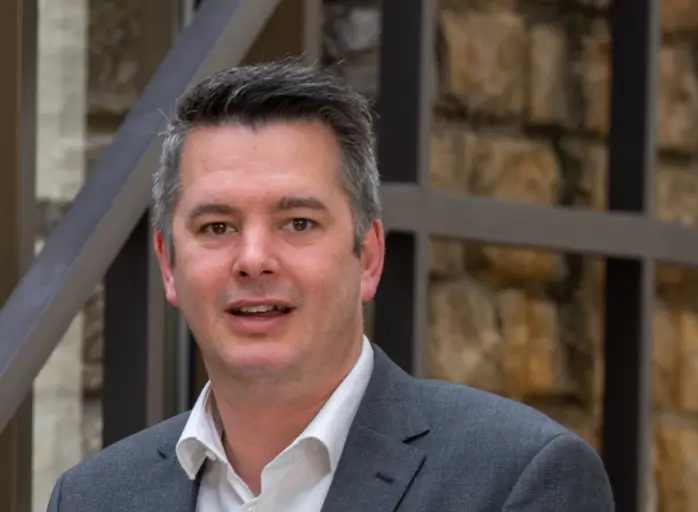
Lex Delles, Minister of the Economy, SMEs, Energy and Tourism
R&D activities also directly impact the national economy: they generate significant private investment, create skilled jobs and stimulate collaboration between companies, research centres and universities. They also help to diversify our economy, reducing its dependence on the development of the financial centre. This positions Luxembourg as a centre of expertise in cutting-edge technology fields such as advanced materials, space, cybersecurity, digital health technologies, artificial intelligence and green technologies. Ultimately, this helps to make our economy more competitive, while providing concrete responses to the major societal challenges of energy transition and digitalisation.
What are the main reasons why Luxembourg manages to attract R&D and innovation-intensive companies and, in many cases, retain them over many decades?
Luxembourg is able to attract, and above all retain, R&D-intensive companies because we offer specific advantages, such as our great political and economic stability, our location at the heart of the European market and our short administrative channels. For large groups considering long-term technological investments, this predictability is often the deciding factor.
At the same time, we have developed a comprehensive ecosystem dedicated to research and innovation. This includes public research centres such as the Luxembourg Institute of Science and Technology (LIST) or the Interdisciplinary Centre for Security, Reliability and Trust (SnT), a young but industry-oriented university and our national innovation agency, Luxinnovation. Luxinnovation provides support and guidance to companies, as well as various programmes to support R&D, innovation and digital transformation.
Many companies remain in Luxembourg because they have found an environment in which they can experiment, collaborate and develop long-term projects with the government.
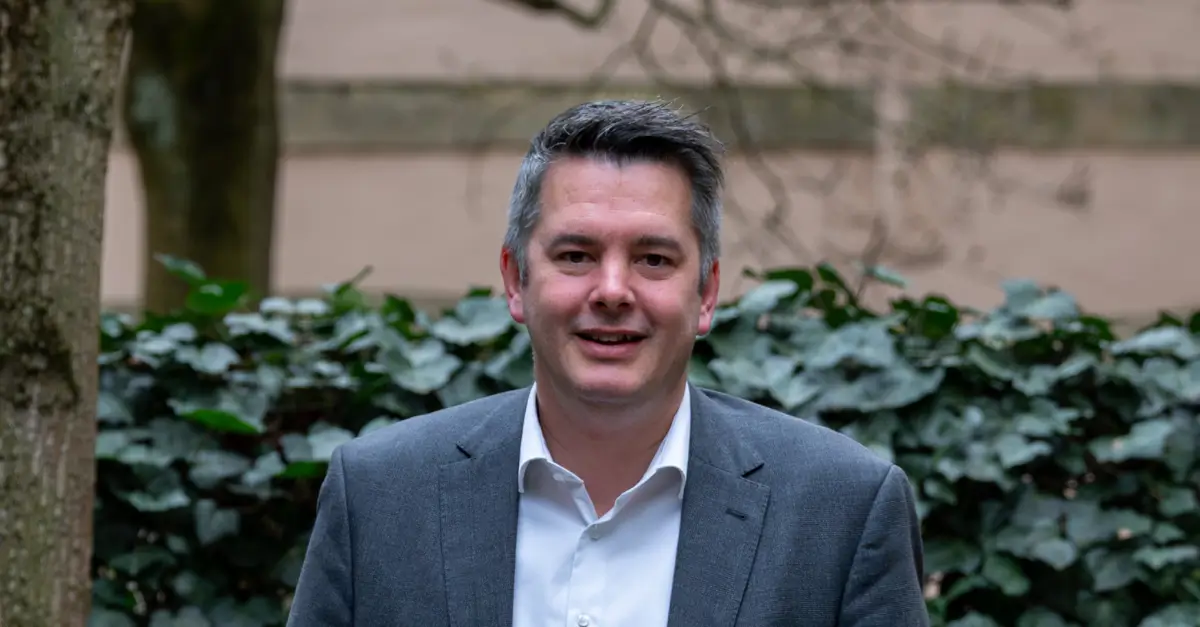
Lex Delles, Minister of the Economy, SMEs, Energy and Tourism
This makes it easier for companies to form strategic partnerships and develop ambitious collaborative projects while making use of state-of-the-art infrastructure, thereby strengthening their roots in the country.
Luxembourg's small size is also an advantage. Decision-making processes are short, dialogue between public, private, and academic stakeholders is direct, and support instruments can be adapted quickly, particularly to encourage projects related to the green and digital transitions. Many companies that established their first research teams several decades ago emphasise this point: they remain in Luxembourg because they have found an environment in which they can experiment, collaborate and develop long-term projects with the government, whom they regard as a reliable partner.
Are there any particular fields where Luxembourg sees especially strong opportunities to attract these companies?
Yes, there are currently several sectors offering particularly attractive opportunities for companies conducting R&D and innovation activities in Luxembourg. Our economic diversification strategy focuses on areas where the country can combine excellence with well-established ecosystems and advanced technological capabilities.
Firstly, we see strong potential in technologies related to data, artificial intelligence and quantum technologies. These areas are essential pillars of our vision for a sustainably innovative economy, supported by national capabilities such as the Luxembourg AI Factory and the MeluXina, MeluXina-AI and MeluXina-Q supercomputers. We also see opportunities in autonomous driving and smart mobility systems. But also in the space sector, an area in which Luxembourg enjoys a unique position in Europe thanks to ESRIC, the future Space Campus and a dynamic ecosystem of companies and research organisations. Furthermore, health technologies, which are supported by dedicated infrastructure such as the House of BioHealth and the future HE:AL Campus are a sector that is explored. Other areas of interest include cybersecurity, supported by the Luxembourg House of Cybersecurity, and Industry 4.0, logistics and supply chain 4.0, which benefit from our central European location and first-class physical and digital infrastructure. We are also interested in sustainable construction, which is already undergoing a profound transformation towards energy efficiency and the use of innovative materials, as well as clean technologies, particularly the circular economy and the transition to a low-carbon industry.
In all these sectors, our ambition is clear: to create the conditions that enable innovative companies to design, test and deploy their technologies in the heart of Europe, in a stable, agile and forward-looking environment.
Could you highlight any recent initiatives or policy measures designed to strengthen Luxembourg's attractiveness for such companies?
Yes, several recent initiatives clearly illustrate our desire to enhance Luxembourg's attractiveness to innovative companies that are highly active in R&D. We have made the strategic choice to invest in technological infrastructures of excellence, modern regulatory frameworks and collaboration platforms that are unique in Europe.
In the field of smart mobility, the AutoMobility Campus is a major asset: it offers an integrated environment enabling companies to test, develop and deploy autonomous driving and digitalised mobility solutions. It is part of our ambition to be at the forefront of future mobility, with national projects such as an autonomous driving strategy across the country from 2028.
The space sector is benefiting from strong political momentum with the European Space Resources Innovation Centre (ESRIC), the world's first centre dedicated to space resources, and the Space Campus currently under construction on two sites. This allows to attract talent, start-ups and R&D projects, positioning Luxembourg as a European leader in the development of space technologies.
We have made the strategic choice to invest in technological infrastructures of excellence, modern regulatory frameworks and collaboration platforms that are unique in Europe.
Lex Delles, Minister of the Economy, SMEs, Energy and Tourism
We have also strengthened our offer in digital technologies with the Luxembourg AI Factory, the MeluXina supercomputer, and the future MeluXina-AI and MeluXina-Q supercomputers, designed to enable companies to experiment, train AI models or develop new data-driven solutions, as well as the rise of new quantum infrastructures.
Finally, we have put in place financial incentives for innovation-based companies and start-ups, as well as strong sectoral initiatives in healthtech, cybersecurity, cleantech and industry 4.0. In all these efforts, the goal remains the same: to create an environment conducive to experimentation, industrialisation and the sustainable establishment of the most innovative technology companies in Luxembourg.
In your opinion, what more could be done in Luxembourg to encourage further public-private collaborations in the field of R&D and innovation?
To encourage public-private partnerships, the Ministry of the Economy runs a specific funding scheme for research, development and innovation. The scheme co-finances a percentage of the total investment in business projects carried out jointly with a research institute, with payment made at the end of the project. Nearly 44 projects have been financed in this way over the last five years, representing a total investment of €200 million, €120 million of which was in the form of grants.
To encourage public-private partnerships, the Ministry of the Economy runs a specific funding scheme for research, development and innovation.
Lex Delles, Minister of the Economy, SMEs, Energy and Tourism
Alongside these projects in collaboration with public research institutes, since 2021 we have been working with the Luxembourg National Research Fund, supported by Luxinnovation, to launch joint calls for projects specifically aimed at fostering collaboration between businesses and public research institutes (University of Luxembourg, LIST, the Luxembourg Institute of Health (LIH) and SnT). Following an initial call for healthtech projects, subsequent calls have been launched in defence, high-performance computing for 5G and, most recently, artificial intelligence, data and quantum technologies.
Public-private partnerships could be further strengthened by increasing the number of such calls, which have so far been very successful. Since 2021, 40 projects have emerged as a result of these calls: six are related to health technologies, nine to 5G, six to high-performance computing, ten to defence and nine to artificial intelligence.
Interview conducted in late February 2026
Photo credits: Luxinnovation/Capsule
This article was originally published in Crossroads Magazine no. 9. Read the full edition below: