What keeps Luxembourg competitive for global investors
Luxembourg grew its foreign direct investment project numbers by 6% in 2025 while Europe declined. EY’s Brice Lecoustey explains what sustains that advantage.
 Lena Mårtensson
07/07/2026
Luxembourg recorded a 6% increase in foreign direct investment (FDI) projects in 2025, while the European average fell by 7%, according to the EY Luxembourg Attractiveness Survey 2026. We spoke to Brice Lecoustey, Consulting Partner and Luxembourg Attractiveness Survey Leader at EY Luxembourg, about the country's assets, challenges and potential as a testbed for the industries of tomorrow.
Key factors driving FDI in Luxembourg
Which factors best position Luxembourg as a destination for foreign direct investment over the next few years?
Brice Lecoustey: Investment decisions are not only based on financial criteria – most investors want a location where their commercial or innovative activity can prosper in the coming 5, 10 or 15 years. When analysing the past decades, Luxembourg has clearly offered a stable, predictable environment where long-term policies are implemented even when the government changes.
The tax environment is predictable, and due to its healthy economic fundamentals, the country is a safer option compared to some other locations where massive public deficits create a lot of uncertainty regarding different types of taxes and even the national resilience. The regulatory environment in the financial sector is also favourable with a very professional regulatory body. Many staff members have an industry background and show genuine understanding of the issues companies face.
Luxembourg offers a highly competitive support environment for long-term innovation projects.
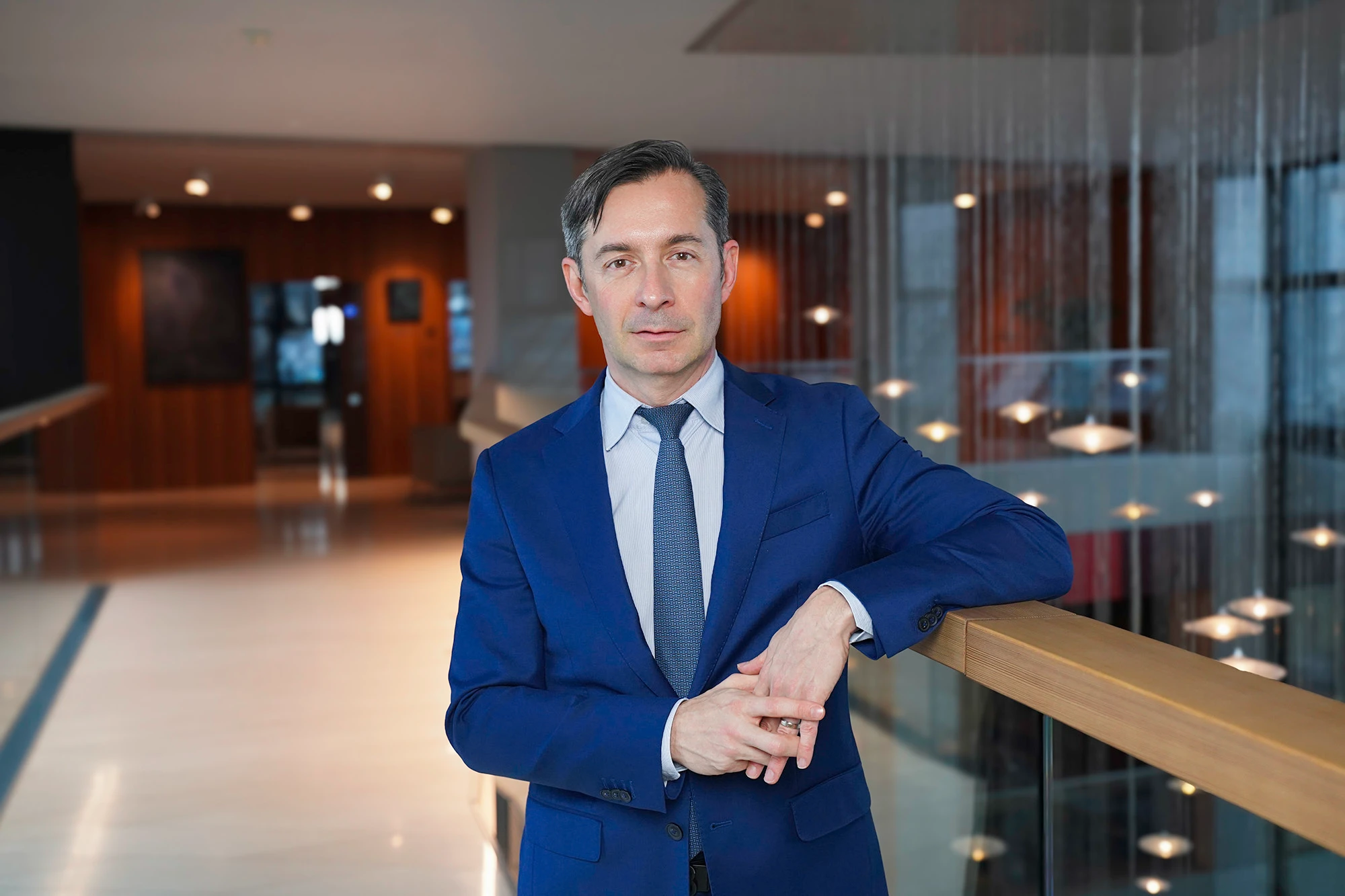
Brice Lecoustey, EY
The foreign direct investors we surveyed expressed clear confidence in the depth and quality of Luxembourg's talent pool – a factor that is increasingly decisive in long-term investment decisions. There are specialists available in the financial, service and manufacturing industries as well as AI-related innovation. Luxembourg is considerably more attractive from this standpoint than it was five years ago.
Finally, Luxembourg offers a highly competitive support environment for long-term innovation projects, with Luxinnovation, the national innovation agency, facilitating access to national and European R&D and innovation funding. Partnerships with research institutes such as the Luxembourg Institute of Science and Technology (LIST) can also considerably boost companies’ innovation capabilities.
Luxembourg's execution challenges for innovation-led investment
Where do you see the biggest “execution challenge” for Luxembourg to stay competitive for future-oriented investment?
The capacity to support and scale innovation in fields such as defence, finance and cleantech is crucial. Defence is a major driver of innovation that also has the potential to benefit the civil society, and Luxembourg companies need to be involved in concrete projects at the European and NATO levels. Innovation is also needed to continue building strong, resilient infrastructure that can withstand crises.
In the financial sector, digitalisation needs to be considerably accelerated. Luxembourg offers an 18% investment tax credit for companies investing in digital transformation, but uptake remains low due to limited awareness among eligible companies.
Luxembourg has a role to play as a driver of a more efficient and pooled way of managing energy in Europe.
Brice Lecoustey, EY
To facilitate cleantech innovation, European regulations regarding sustainability must be implemented in a pragmatic, business-friendly manner. In addition, Luxembourg is dependent on importing energy, which can be a weakness. Generating sustainable energy through wind and solar power, for example, is part of the solution, but at one point in time, it will no longer be enough. Europe needs to invest in research to develop new, energy-efficient technologies. Luxembourg has a role to play as a driver of a more efficient and pooled way of managing energy in Europe, inspired by the concept of the European Coal and Steel Community created in the early 1950s that laid the foundations of what today is the European Union.
Luxembourg as a testbed for innovation projects
Which types of innovation projects are best suited to Luxembourg as a testbed?
There is strong potential for defence and space-related projects. Luxembourg has a strong space ecosystem with global space solutions company SES as a central player, and a new Defence Campus, a government-backed facility designed to bring companies and public research institutions under one roof, is currently in development. There is also potential for synergies with the Belgian defence industry.
With its multimodal logistics hub including integrated air, road and rail infrastructure and its well-developed public transport system, Luxembourg is an interesting testbed for logistics and smart mobility solutions. Its compact size means a city — or even the entire country — can be rapidly equipped with a new system to test its performance at scale. The same principle applies to sustainable energy solutions. The country has already demonstrated this by achieving near-comprehensive solar panel coverage across all viable sites. Such initiatives will continue to drive the development of energy-efficient technologies.
A credible pathway for long-term investors in Europe
What would a credible pathway look like for Luxembourg to reassure innovation-intensive investors committed to long-term operations in Europe?
Luxembourg has a strong track record of predictability and sustainability. Over the past decades, when the country committed to anything, it was done. Companies that choose to come to Luxembourg years ago for specific reasons still benefit from the same environment, undisturbed by economic factors, political instability or social unrest.
Companies that choose to come to Luxembourg years ago for specific reasons still benefit from the same environment, undisturbed by economic factors, political instability or social unrest.
Brice Lecoustey, EY
This is essential for foreign direct investors who want to develop activities over time. With the current global instability, being able to operate in a predictable environment – even if the cost level is somewhat higher – is crucial. Luxembourg can be considered the smart way into Europe as it has delivered on its promises.
Luxembourg is not without its constraints, but it consistently delivers on its commitments — reinforcing its position as a reliable investment hub for companies that need stability above all else.
In Luxembourg, we stay true to who we are and prove it through consistency over time.
Photo credits: EY