The future of AI is offline, on-device access
Originally from South Korea, Data Design Engineering is pushing the boundaries of the highly innovative offline, on-device technology from its HQ in Luxembourg.
 Lena Mårtensson
22/01/2026
AI models running directly on local devices, such as drones or industrial robots, not requiring a constant internet connection or cloud access, offer many advantages. To start, sensitive data remains on the device, reducing exposure to breaches or misuse; it is also easier to comply with data protection laws. Additionally, results are delivered instantly, with no latency from cloud communication, and AI features remain functional even without internet access. Operating offline also helps reduce data transmission costs and the higher energy consumption typically associated with cloud computing.
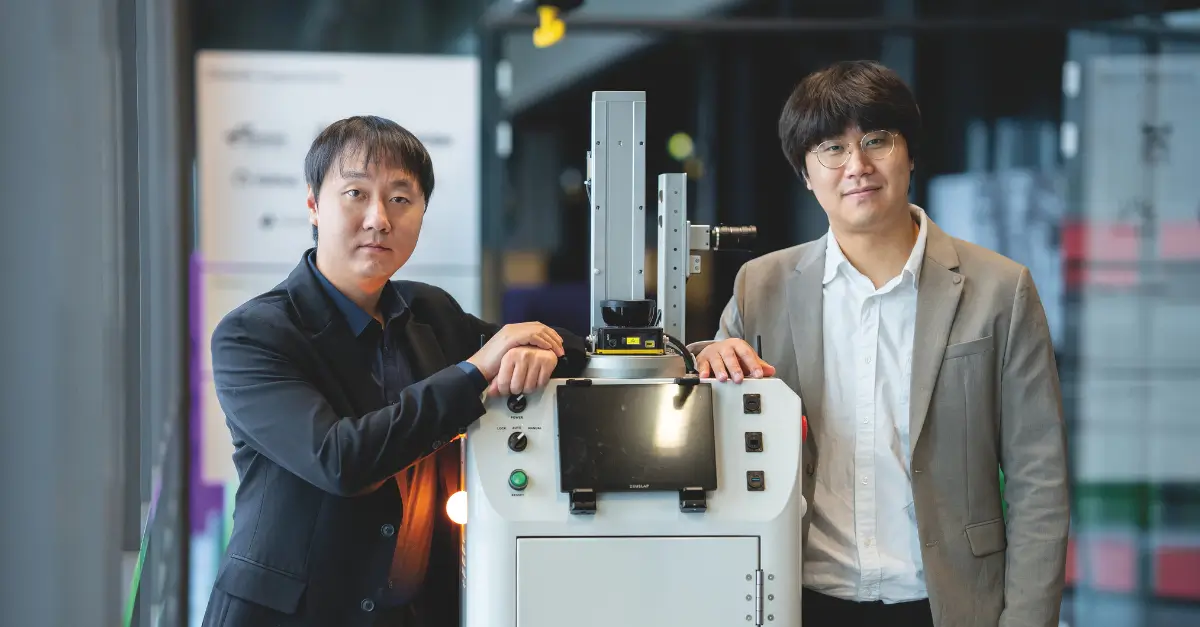
“This is a major trend that we will see expanding over the next 5-10 years – but our technology is already here,” says Ben Kim, Head of Business Development at Data Design Engineering (DDE). Founded in Seoul in 2014, the company introduces on-edge device offline AI technology, embedding AI models within robots and unmanned equipment for autonomous operations, even when offline and in GPS/GNSS-denied environments.
While many other AI devices that function without cloud access still require a connection to a local server via Wi-Fi or 5G, DDE’s technology is fully autonomous. Utilising compressed large multi-model AI systems, it supports real-time decision making, planning and human interaction without cloud or network reliance.
DDE’s intelligence on-edge device offline AI technology recently won the first Luxembourg AI Excellence Award in the category “AI Innovation Excellence”.
Achieving full AI autonomy
DDE arrived in Luxembourg in 2022 with the vision of expanding into the European market and beyond. A meeting with the CEO of a Luxembourg-based ultra-lightweight technology specialist company, Gradel, opened DDE’s eyes to the opportunities Luxembourg offers to innovative businesses.
“Gradel became our first client and a close partner, and we discovered a place where the government actively promotes opportunities, supports cooperation among companies and helps in the international business development,” says Mr Kim. He regularly participates in international trade missions and visits to leading trade fairs organised by the Luxembourg government and the Chamber of Commerce, which offer excellent opportunities to establish new business relations.
We discovered a place where the government actively promotes opportunities, supports cooperation among companies and helps in the international business development.
Ben Kim, Data Design Engineering
A significant challenge of offline on-device AI is the need to compress large AI models to run efficiently on limited hardware – a challenge that DDE has already overcome. All its AI models are fully developed in-house, which means that the company can lightweight, optimise and compress them sufficiently for powerful AI functionalities to run locally, even on compact chips that are considerably more affordable than those typically used.
Growing European demand
DDE has also developed “Dobby”, an on-device AI assistant tailored for edge device technology, which enables robots and vehicles to operate offline and make autonomous decisions, such as real-time collision avoidance.
Dobby also interprets voice commands accurately and adjusts the robot’s actions accordingly. This technology is notably deployed in industrial robots operating in highly sensitive environments, as well as in the company’s latest innovation: a smart, autonomous chair that can be moved with voice instructions.
While business opportunities abound globally, a key reason for this decision is the outstanding support we have received from the Luxembourg government and the local business community.
Ben Kim, Data Design Engineering
The European interest in DDE’s technologies is growing rapidly. On the local level, in addition to the private industry, the company is working in various sectors such as manufacturing, space, railway and defence.
Riding on this momentum, DDE decided to transfer its global headquarters to Luxembourg in 2025. “While business opportunities abound globally, a key reason for this decision is the outstanding support we have received from the Luxembourg government and the local business community,” says Mr Kim. “People are kind and welcoming, and in business, they always aim for a shared victory. We are definitely here to stay.”
Photo credits: Luxinnovation/Capsule