



Improving access to EU health data
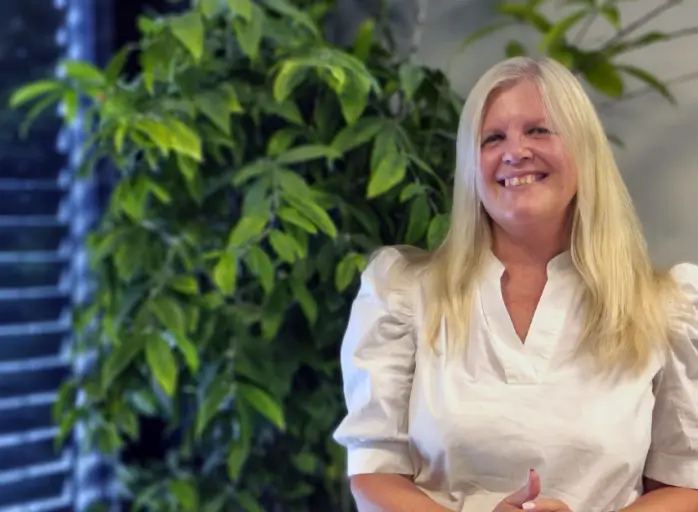
Karen Crabbé, Economic and Health Data Advisor at pharma.be, speaks about the impact of the European Health Data Space (EHDS).
 Lena Mårtensson
16/04/2026
What opportunities will the EHDS bring to the pharma industry?
Karen Crabbé: Until now, pharma companies have often had to set up their own systems to collect real-world data from sources such as reimbursement claims, patient-reported outcomes, disease registers and mobile health applications. We anticipate that the European Health Data Space (EHDS) will facilitate our access to such data.
By making much larger datasets available, the EHDS will also drive the development of AI tools that will become more accurate and useful for healthcare professionals.
According to the EHDS, data holders must make a wide range of data available to other players for permitted secondary use. Do you see this requirement as a potential threat?
It can for sure be an issue, but data holders will be able to indicate which data is sensitive due to intellectual property rights or trade secrets. If their classification is confirmed, health data access bodies will restrict access to the specific data.
Do you think this obligation could discourage international pharma companies from conducting R&D in Europe?
No, I doubt that. The situation today is more complicated and the data more fragmented than it will be after the introduction of the EHDS, yet it still doesn’t prevent the pharma industry from conducting research here today. The EU is an attractive market, and using data from European patients is required for market entry. I expect the EHDS to improve the situation for real-world data-driven studies and treatments.
Photo credits: pharma.be




_previewimage.webp)