Turkish space spin-off chooses Luxembourg for Moon tech
Turkish industrial firm Polimak creates Luxembourg spin-off to develop regolith handling technology for lunar missions, backed by ESRIC's startup programme.
 Lena Mårtensson
10/03/2026
In recent years, humanity’s return to the lunar surface has moved from ambition to active planning. New scientific discoveries indicate that resources available on the Moon could be used both to help sustain human presence and to fuel initiatives for further space exploration.
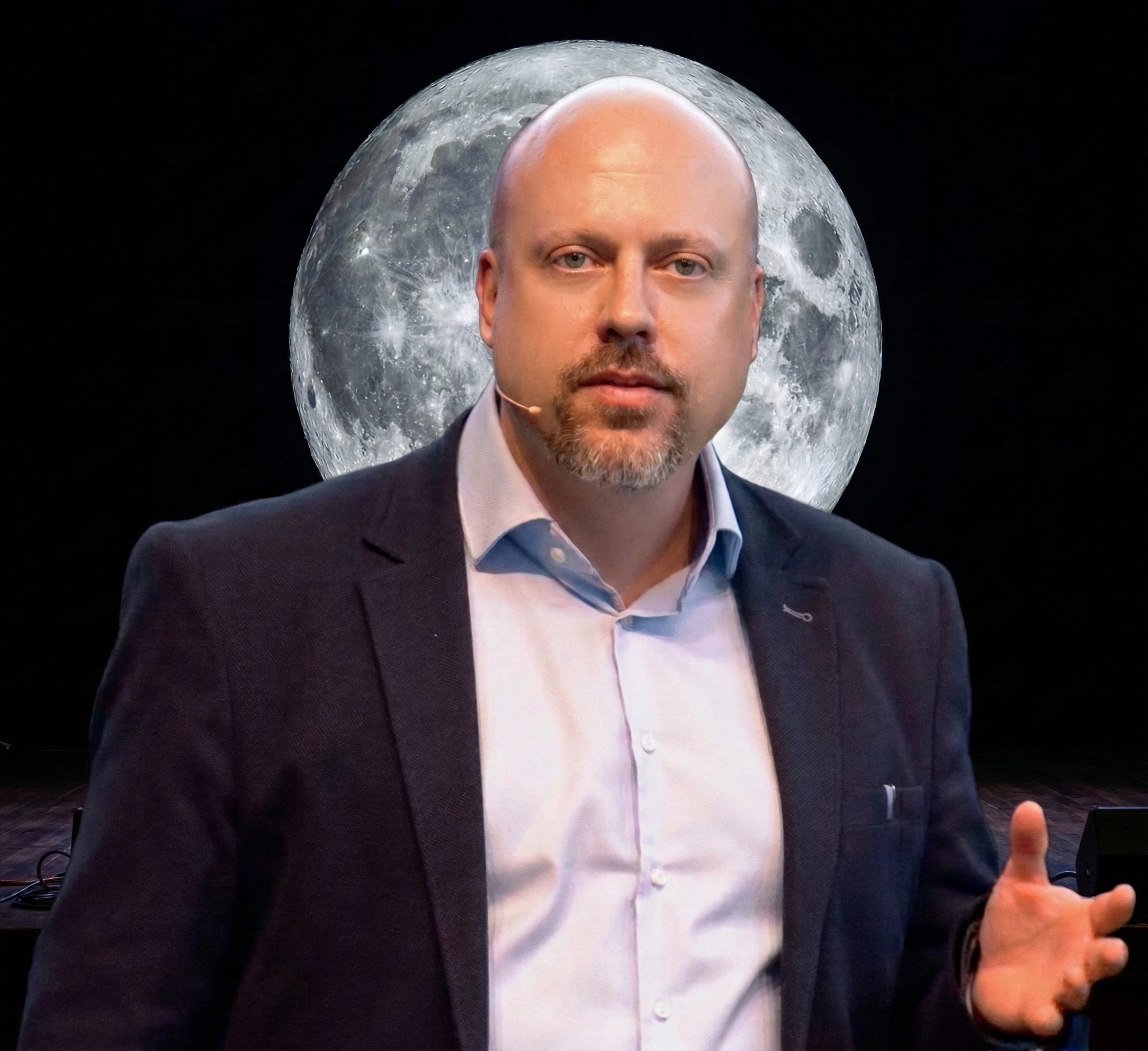 Regolith – the fine, powdery layer covering the Moon – holds potential for producing water, oxygen and building materials, as well as for extracting helium-3 which can power nuclear fusion. However, processing it poses an industrial problem that few have thought about: how to move material across the lunar surface. Regolith behaves nothing like sand on Earth. Formed by meteorite impacts rather than water erosion, it is abrasive, sticky and sharp enough to destroy conventional conveying equipment within hours. “It's like sandpaper, extremely rough,” explains Roderick Rühl, a Luxembourg-based planetary scientist. “If you want to build an industrial process, even at the smallest scale on the Moon, you need to rethink everything.”
If you want to build an industrial process, even at the smallest scale on the Moon, you need to rethink everything.
Roderick Rühl, Polimak Space
This overlooked logistics problem is precisely where Polimak Space sees its opportunity. The newly incorporated Luxembourg company – a spin-off of Turkish bulk solids specialist Polimak Industrial – is developing lunar technology to solve a challenge that few have addressed.
Solving the regolith handling challenge
With over four decades of history, engineering and fabrication company Polimak specialises in handling technologies for bulk solids such as cement, sand, oil and other liquids. Seeking paths for future expansion, its general manager, Süleyman Salihler, attended the Space Resources Week in Luxembourg a few years ago and learnt about the potential for earthbound businesses to move into space. He saw potential for Polimak in the field of regolith handling.
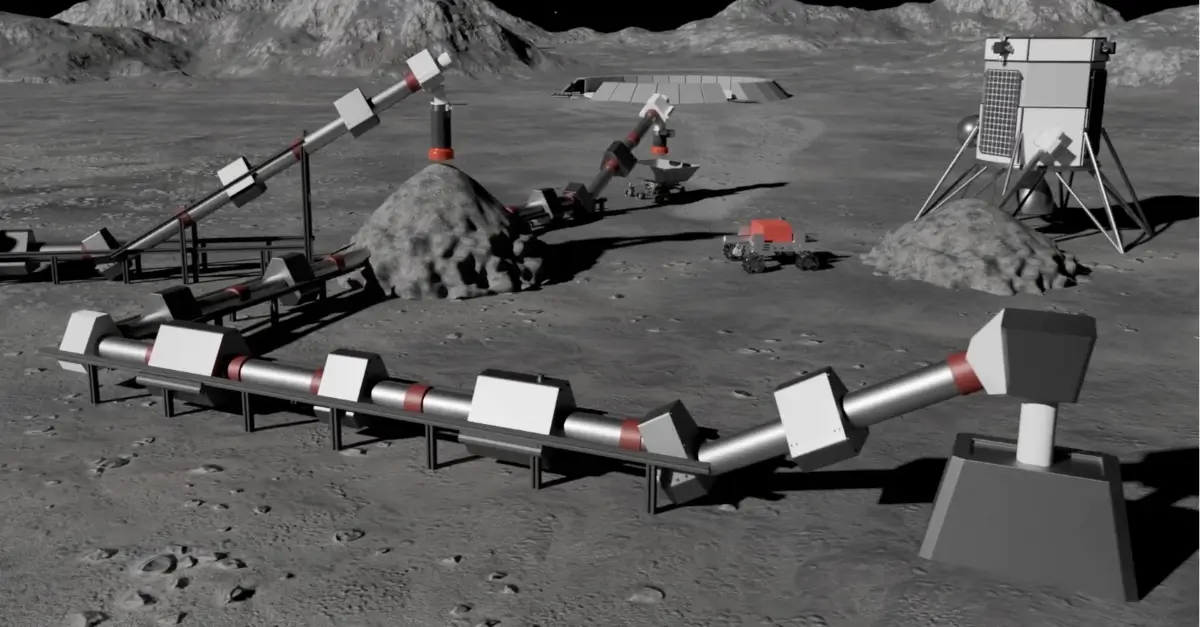
Mr Salihler designed an innovative system for regolith handling: a modular drum conveyor. By rolling the regolith particles rather than pushing them along a tube, like a conventional system would, it avoids clogging and rapid wearing down. This patented system is energy efficient and suitable for low gravity. In addition, all main components can be made from extraterrestrial materials.
Why Luxembourg for space resources?
Polimak Space was created to further develop the technology and bring it to market. The founders had several logical options for where to locate their spin-off: close to home in Turkey, or in Germany or the US where the company has offices. But Mr Rühl suggested Luxembourg. As the former Head of Business Development at iSpace Europe – a Japanese space lunar exploration company with its European HQ in Luxembourg – he was convinced that the country offered the right ecosystem.
“Several years ago, the Luxembourg government launched a dedicated initiative to support space resources exploration and utilisation, positioning Luxembourg as a European hub for this emerging sector. The recent European interest in the Moon relaunched the momentum,” says Mr Rühl, who took up the position as Polimak Space’s co-founder and Managing Director. “As our activities focus on in-situ space resources utilisation – commonly known as ISRU – Luxembourg was really the only place in Europe that would completely make sense for us.”
Another decisive factor was the presence of the European Space Resources Innovation Centre (ESRIC). As the world's first innovation centre entirely dedicated to space resources, it contributes to making Luxembourg a natural destination for companies working in this field. In 2025, Polimak Space successfully applied for a place in ESRIC’s prestigious startup support programme.
As our activities focus on in-situ space resources utilisation – commonly known as ISRU – Luxembourg was really the only place in Europe that would completely make sense for us.
Roderick Rühl, Polimak Space
After completing the first phase of the programme, the company was selected for Phase 2 which helps it accelerate its R&D efforts and unlocks a budget of €200,000. “Being part of the ESRIC startup support programme provided the perfect start for setting up the entity here in Luxembourg,” says Mr Rühl, highlighting that the company is hosted at the technology-oriented incubator Technoport. “This gives us the opportunity to move the IP to the newly created entity, develop a simple prototype and apply for local funding for a larger R&D project.”
Building a lunar technology company in Luxembourg
The priority for Polimak Space over the coming two to four years is to pursue its R&D activities to finalise its solution and become an industry standard for regolith handling in space. The next phase will then be to work on its first mission to the Moon. The company is expecting to receive its first venture funding shortly, and also plans to seek additional research funding from the European Space Agency and from programmes backed by the Luxembourg Space Agency.
It is quite exceptional to have this type of vision and stick to it.
Roderick Rühl, Polimak Space
In parallel, Mr Rühl plans to build a secondary commercial leg for the company, offering Polimak’s non-space products to local companies to generate more immediate revenue in Luxembourg. “Building partnerships and getting into European space programmes takes time,” he comments. “To widen our work, we are also planning to act as a bridge to Turkish aerospace companies, providing access to cost-effective engineering services not available in Luxembourg such as space flight qualification testing at Turkish facilities.”
Looking ahead, Mr Rühl commends Luxembourg’s long-term vision for the space sector. “It is quite exceptional to have this type of vision and stick to it, and I think that 10-15 years down the line, it will really pay off.”
He underlines that space industry is about high-value, specialised jobs, and not a sector that will generate mass employment but rather create value due to its pioneering innovation. “The sector is clearly attracted to Luxembourg,” he concludes.
Photo credits: Polimak Space