AI in healthcare: Where the greatest untapped potential lies
Health AI expert Sigrid Berge van Rooijen shares insights on digital health innovation in Europe from the European Digital Healthtech Conference 2026.
 Lena Mårtensson
08/04/2026
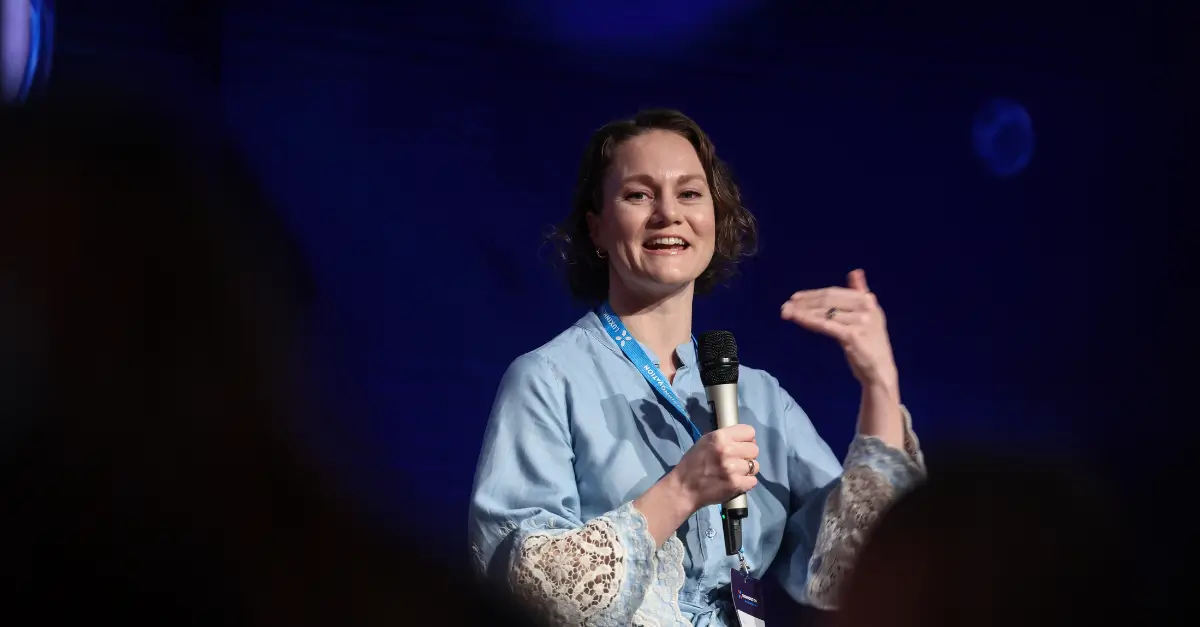
AI-powered digital medical devices can transform healthcare, but ensuring their adoption remains a challenge. We spoke to health AI consultant Sigrid Berge van Rooijen, who moderated a panel at the European Digital Healthtech Conference 2026 about where AI in healthcare can have the greatest impact, what the EU must do to facilitate healthtech market access and what startups should keep in mind to succeed.
AI's impact on healthcare today and tomorrow
Where is AI making the most tangible difference for patients and clinicians today and tomorrow, and where do you see the greatest untapped potential?
Sigrid Berge van Rooijen: Artificial intelligence-powered tools can make a real difference in healthcare administration, for instance to automate note-taking and scheduling of medical consultations or to accelerate triage procedures. Such tools are already used, but processes are still not fully automated because healthcare professionals and patients are still not accustomed to them.
For the future, I see great untapped potential to use AI-enhanced digital medical devices for more personalised care, such as determining the optimal type of treatment for each patient and how illness can be prevented. There are also many opportunities in the field of home care and hybrid care, which blends in-person visits to the hospital with telehealth and remote monitoring.
I would have expected this development to be much more advanced than is the case today.
Sigrid Berge van Rooijen
I would have expected this development to be much more advanced than is the case today, but there are several factors slowing it down. Firstly, new ways of delivering care also require new approaches to reimbursement by social security systems and insurers. This is often complicated to put in place, and it is easier to continue reimbursing traditional face-to-face meetings with the doctor.
A second challenge is regulatory. A lot of health data is collected through apps and wearables, but it is not transformed into relevant insights and action points because the moment you want to do so, your device needs to be compliant with the Medical Device Regulation (MDR), which can be a rather lengthy and costly process. I’m clearly pro-regulation, but we have to acknowledge that sometimes the need for regulatory compliance hampers innovation.
Overcoming EU healthcare market fragmentation
What do you consider to be the key conclusion that emerged from this year’s edition of the European Digital Healthtech Conference, in particular the panel you moderated on how Europe can take the lead in the field of innovation, regulation and competitiveness?
I think the key point is how to overcome the current fragmentation of the European healthcare market, with different care and reimbursement systems in each of the 27 EU member states.
One interesting observation made during the conference was that in the US, the Food and Drug Administration (FDA), in charge of protecting and promoting public health, can issue recommendations on new solutions that inform reimbursement decisions. I think having a similar body in the EU that could provide recommendations would be helpful. It is very challenging for hospitals and insurance companies to keep track of both evolving regulations and new innovations that are emerging all the time, and they could benefit from this type of guidance.
Balancing safety standards and healthtech innovation in Europe
Do you think Europe can realistically uphold high safety standards while remaining an attractive place for healthtech innovation?
I think so. The EU is a very big and attractive market, with a population significantly exceeding that of the US, for example. European regulations such as the European Health Data Space, which will give patients greater control over their health data and enable its secure sharing for research and innovation, the MDR and the AI Act should be used to help overcome fragmentation.
If there is a push in this direction, Europe will be able to remain attractive for healthtech innovators.
Sigrid Berge van Rooijen
A second step would be to find ways to make healthcare systems and reimbursement pathways more similar, to streamline healthtech market access across the EU for digital medical devices. This could make it easier for healthtech companies to launch their devices first in one market – Luxembourg, for example – and then move to others that might be similar.
If there is a push in this direction, Europe will be able to remain attractive for healthtech innovators. However, we’re not there yet. It would have to be done piece by piece in an intentional manner.
Luxembourg as a hub for digital health innovation
Having spent two days immersed in the local ecosystem, what stands out to you about Luxembourg as a hub for digital health innovation?
What strikes me most is the collaborative atmosphere that I feel here. There are so many different stakeholders in healthcare: patients, healthcare professionals, innovators, researchers, regulators, public decision makers and many others who you don’t always think about, such as hospital IT managers and procurement officers. New digital medical devices will only be adopted if everyone’s perspective is taken into account. Luxembourg is doing a good job of bringing them together and offering a forum for these different perspectives, as the European Digital Healthtech Conference demonstrates.
Advice for healthtech startups entering the EU market
If you could give one piece of practical advice to a healthtech startup trying to bring an AI-powered medical device to the European market today, what would it be?
After this event, I would suggest going to Luxembourg! Startups need a place where they can build relationships and make connections that will help them move forward. There are of course other such hubs in Europe, but I have noticed that here, everyone seems to know each other and is motivated to work together, both within the country and across borders to help companies connect with new markets.
Understanding how your innovation fits into the entire care pathway that a patient follows and the healthcare system as a whole is key to success.
Sigrid Berge van Rooijen
It is also important to choose a location that is open to innovation in the healthcare value chain. You also need to understand where your innovation might fit in, as one local ecosystem might be open to one type of innovation but not to another. As was said several times during the conference, understanding how your innovation fits into the entire care pathway that a patient follows and the healthcare system as a whole is key to success.
European Digital Healthtech Conference 2026: Key takeaways
Organised by Luxinnovation with the support of Medical Valley, the European Digital Healthtech Conference 2026 took place on 26–27 March in Luxembourg and focused on key success factors for achieving genuine adoption of digital medical devices in Europe that truly address healthcare needs. Ms Berge van Rooijen’s key takeaways include:
- AI-powered tools are already improving healthcare administration but their full potential in personalised care remains largely untapped.
- Fragmentation of EU healthcare systems and reimbursement pathways is the primary barrier to healthtech market access.
- European regulations (MDR, AI Act, European Health Data Space) can help overcome this fragmentation if accompanied by harmonised reimbursement approaches.
- Luxembourg's collaborative ecosystem and multi-stakeholder approach make it a strategic entry point for healthtech startups.
As Luxembourg continues to strengthen its position as a hub for digital health innovation, events like the European Digital Healthtech Conference provide a valuable platform for startups, investors and health sector stakeholders to connect and exchange ideas. Pre-register for the 2027 edition to be part of the conversation.
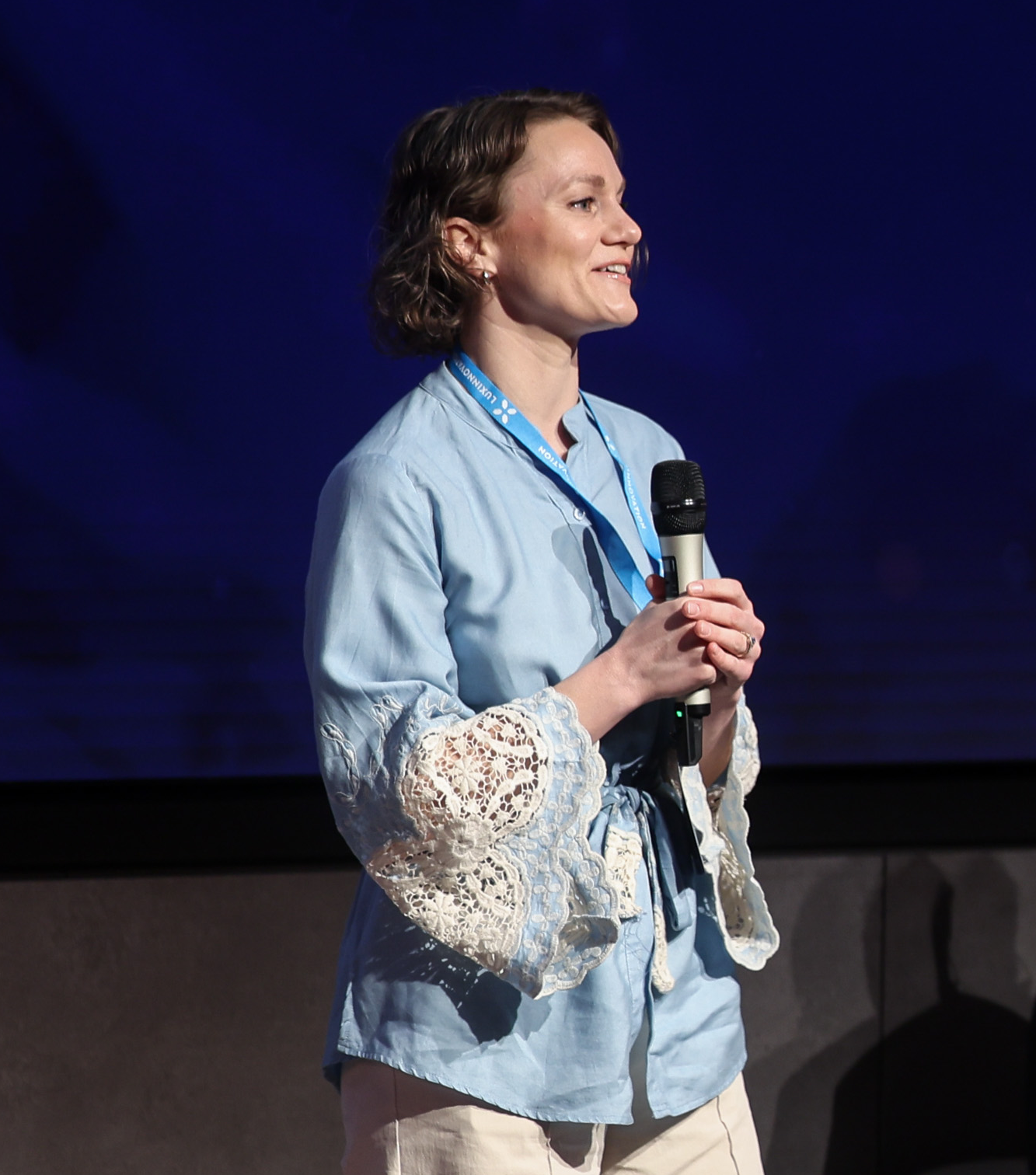
Sigrid Berge van Rooijen is a health AI consultant specialising in the integration of artificial intelligence into healthcare. Motivated by her personal experience of the potential of non-standard treatments, she advocates for AI's role in personalised care. Ms Berge van Rooijen provides AI training across various healthcare sectors, emphasising ethical implementation and patient safety. Her work supports healthcare professionals in adopting AI responsibly, aiming to reduce workload and improve patient care.
_previewimage.webp)